

 Lab-grown diamonds represent more than just a beautiful piece of jewellery. They embody a conscious choice to create positive change in the world. People make a powerful statement by opting for these eco-friendly jewels, supporting responsible practices, and embracing sustainability. Technological advancements and the growing demand for lab-grown diamonds suggest a promising future where love and environmental awareness align seamlessly.
Properties And Characteristics of Synthetic Diamonds
Most of the parameters of natural and lab-grown diamonds are identical. At first glance, even with a magnifying glass, you can’t tell the difference with the naked eye. The characteristics of synthetic diamonds can only be identified by an experienced geologist under laboratory conditions.
Natural and synthetic diamonds do not differ in composition (they are both made of carbon), hardness (they reach the highest grade on the Mohs scale of 10), or other physical and optical properties. They are both equally fragile and split perfectly. They are also identical in the postulates relating to the quality of their brilliance, brilliance and lustre. But then, what ultimately differentiates them? The answer: their origin, the duration and the mode of their crystallization.
To know whether diamonds were lab-grown, it is necessary to understand how the crystals formed. This is because growth in a crystal system leaves invisible lines and other traces in the mineral’s structure, so the crystal’s shape makes it possible to determine the origin of the diamond.
Advantages Of Synthetic Diamonds
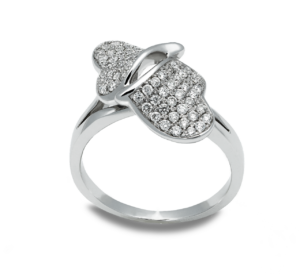 Lab-produced diamonds have several significant advantages. First, the process of synthesis in the laboratory is much shorter compared to natural creation.
Secondly, the significant advantage of synthetic diamonds is undoubtedly their price: 20 to 30% lower than naturally occurring diamonds. In some cases, the difference can even be as much as 50%. The synthetic diamond allows the interested buyer to afford a transparent gemstone of considerable size and superior quality, and he will also obtain perfect clarity and internal structure at a reasonable price. And when choosing an engagement ring, price is a significant factor (and sometimes an obstacle)! Thanks to lab-grown diamonds, you can finally treat yourself – or gift – a ring with a distinctive big diamond without breaking the bank.
The synthetic diamond also makes it possible to influence the desired colour during laboratory synthesis – the stone does not have to be colourless. Colour can be achieved by adding a particular chemical element during synthesis, post-crystallization irradiation, or annealing. The methods used to produce diamonds in the laboratory are constantly evolving, with the primary objective being to ensure that the resulting diamonds stand out in terms of clarity, brilliance, colourway (colourless) and cut.
Finally, it is also worth mentioning the advantages of environmental impact and sustainability. Synthesis in the laboratory is a much more targeted production: in reality, only a tiny part of the diamonds obtained during mining are of high enough quality to be used in jewellery. In the case of laboratory production, humans can, therefore, significantly influence the quality of the stones obtained.